“Forced Ranking: Screening Talent & Solving Political Problems” is now live

forced ranking screening talent solving political problems is now live post

New Video from Mastering Hospitality

“Forced Ranking: Screening Talent & Solving Political Problems” is now live!

In collaboration with Siddhesh Narvekar & Hotelyug

With over 35 years of hospitality leadership across Southeast Asia, I’ve seen first-hand how internal politics and unclear performance systems can silently erode a hotel’s potential.

In this new lesson, I share what truly works—not theory, but practical tools I’ve used to turn teams around and build performance-driven, politically healthy cultures.

Here’s what I cover:

-How to use force-ranking as a leadership tool, not a punishment
-A proven method to screen talent objectively and build trust
-How to identify silent blockers and handle political behavior constructively
-Real-world strategies I’ve used in managing large teams and tough transitions

Whether you’re leading a resort, a city hotel, or a multi-property group—this is for leaders who want to stop guessing, and start building great teams.

Watch the full course →
https://lnkd.in/g9nNq2sP

Full video here→
https://hotelyug.com/courses/mastering-hospitality/module3/sub1/forced-ranking-screening-talent-&-solving-political-problems

Follow for more from the frontline of hospitality leadership:

Dennis Tan | The Everly Group | Siddhesh Narvekar | Hotelyug

The Accidental Hotelier – Our People: Where We Are Today

for all plain post

After analyzing the development of our people, we’ve learnt that all rank-and-file and supervisory-level employees can be trained within three months-if we choose people with the right attributes.

During the hiring process, we focus on attitude and personal attributes. For supervisory-level roles, we also look for leadership potential. We’ve learned not to compromise on numerical ability for key roles like sales, front office, and cash handling—so we administer a simple algebra test when candidates don’t have at least a credit in high school mathematics.

For roles requiring long-to-acquire skills (e.g. maintenance, chefs), we screen for relevant experience.

Orientation and Training

All new recruits undergo orientation and are then assigned to departments, where the department manager is responsible for job skills training. Each department runs a 13-module training program, designed for repetition:

13 modules × 4 quarters = full reinforcement 4 times every year

Staff take turns being the trainer, following a learn, practice, teach methodology.
By the time they teach a module, their confidence and perspective reach a new level.

Developing Department Heads

We’ve found that almost any team member can grow into a department head, even if they didn’t come from that background. Here’s how:

We rotate them through every task within a department on a timeline that allows them to build competence quickly.

This creates multi-skilled teams who can support each other through surges or absences.

Simultaneously, we train them in soft skills and leadership:

Quality Control Circles (QCC)
Lean Manufacturing
5S Methodology
Cross-functional teamwork
These exercises expose them to challenges outside their areas of expertise, developing them into well-rounded professionals.

Investing in Specialized Skills

We send staff for external training, and if the cost is equivalent to one month’s basic salary, they are bonded for 2 years. The bond isn’t about control—it’s about reinvestment: if someone leaves early, that fund helps us train someone else.

During critical periods like hotel openings, we occasionally make compromise hires due to time pressure—but we continue to recruit actively for a better fit.

Final Thoughts

People development isn’t about one-off trainings or motivational talks—it’s about structure, repetition, and belief in human potential. With the right systems and mindset, anyone can grow into something remarkable.

✅If you want a resilient team, invest in attitude, train with purpose, and don’t be afraid to rotate, stretch, and teach. People are the most renewable asset in your business.

Fixing a Struggling Global Hotel Brand

fixing a struggling global hotel brand post

The new video from Mastering Hospitality is now live:

Fixing a Struggling Global Hotel Brand

In collaboration with Siddhesh Narvekar & Hotelyug

A change in leadership saved this hotel from collapse.
I’ve lived through one of the toughest hotel turnarounds — and this is the story.

When I first stepped into this property, morale was at rock bottom.
Guests were unhappy. Staff were disengaged. Revenues were declining fast.
It wasn’t just a hotel in trouble — it was a brand on the verge of losing its identity.

But we turned it around.

In this video from the Hotel Turnaround Stories module, I share the exact steps we took — not just theory, but the real moves that changed the game.

Here’s what I break down:

-How aligning the leadership team was the first breakthrough
-The role of training, feedback, and goal-setting in reviving the culture
-Tactical strategies we used to win back guest trust and brand reputation

If you’re leading a hotel that’s lost its way — this story might help you find the roadmap back.

Full course→
https://lnkd.in/g9nNq2sP

Full video here→
https://hotelyug.com/courses/mastering-hospitality/module1/sub2/fixing-a-struggling-global-hotel-brand

Follow for more real-world hospitality insights:

Dennis Tan | The Everly Group | Siddhesh Narvekar | Hotelyug

Delegation & Trust as a Leadership Strategy

delegation trust as a leadership strategy post

New video from Mastering Hospitality is now live!

Delegation & Trust as a Leadership Strategy

In collaboration with Siddhesh Narvekar & Hotelyug.

In hospitality, you don’t just run a hotel — you lead people.
And if you want a truly high-performing team, delegation isn’t optional — it’s foundational.

Early in my career, I believed staying in control meant staying effective.
But I learned the hard way:

True leadership is about building trust systems, not bottlenecks.

This episode draws from my approach to human management — and explores what it really takes to create a motivated, self-sustaining workforce.
Inside, I share:

– Why most delegation efforts fail
– The invisible cost of micromanagement
– How trust-based leadership transforms morale and performance

This isn’t theory — it’s strategy shaped by decades in the field.

Full course here→
https://lnkd.in/g9nNq2sP

Full video here→
https://hotelyug.com/courses/mastering-hospitality/module2/sub1/delegation-trust-as-a-leadership-strategy

Follow for more real-world hospitality insights:

Dennis Tan | The Everly Group | Siddhesh Narvekar | Hotelyug

Why Hoteliers Struggle to Understand Financials of Each Component

why hoteliers struggle to understand financials of each component post

New video from Mastering Hospitality is now live!

Why Hoteliers Struggle to Understand Financials of Each Component

In collaboration with Siddhesh Narvekar & Hotelyug

In my 35+ years in hospitality, I’ve seen too many properties confuse revenue with real profitability.

In this video, I break down:

– Why busy outlets can still bleed money
– The danger of chasing topline without margin clarity
– How to evaluate each department with commercial intelligence

This isn’t theory — it’s built on real stories, real numbers, and practical turnaround strategies.

If your hotel has multiple outlets but unclear margins — this one’s for you.

Full course →
https://lnkd.in/g9nNq2sP

Full video →
https://hotelyug.com/courses/mastering-hospitality/module4/sub2/why-hoteliers-struggle-to-understand-financials-of-each-component

Follow for more real-world hospitality insights:

Dennis Tan | The Everly Group | Siddhesh Narvekar | Hotelyug

The Accidental Hotelier – Our People

the accidental hotelier lessons about people 1

Let me share with you my journey in building a great team.
When I first started out, I focused on hiring very smart people. But after going through tough times and a few business failures, I learned that being smart wasn’t enough—character mattered more.

Just like good cooking starts with fresh, high-quality ingredients, building a great company begins with hiring people whose values and beliefs align with yours.

To improve our hiring process, I experimented with various personality profiling tools. Early on, I used The Personality and Preference Inventory (PAPI), developed by Max Kostick of Boston State College. While it was useful, it could be manipulated, making the results unreliable for recruitment.

I later explored Myers-Briggs and DISC. Both offered helpful insights but shared the same flaw: they couldn’t assess the truthfulness of a candidate’s responses.

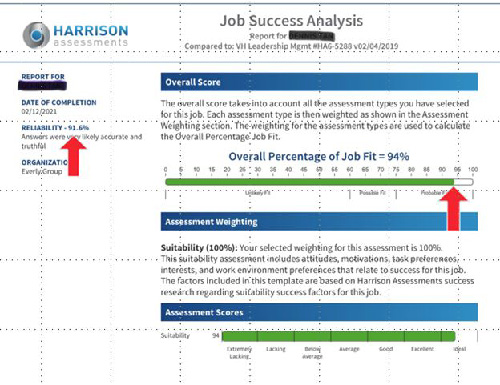
Then in 1996, I discovered Harrison Assessments through a newspaper article. I contacted the company, and coincidentally, Dr. Harrison himself was in town. His system had a reliability score, and it allowed us to design job-specific templates based on the profiles of our best performers. I was sold immediately.

Our rule is simple: if the reliability score is below 80%, we don’t pay and we don’t proceed—because the report isn’t accurate.

We now have templates for most of our roles. The system also offers a job fit score. For instance, an 80% fit means there’s an 80% likelihood that the candidate will succeed in that role.

the accidental hotelier lessons about people 1
the accidental hotelier lessons about people 2

For management trainees, we insist on a minimum 85% fit against our leadership template. That’s because training leaders is expensive, and we want our investment to succeed. A high bar ensures a 6 out of 7 success rate.

We also apply a two-strike policy on reliability: if a candidate scores low twice, we stop the process.

Here’s an example:
Reliability score – 91.6%
Job Fit score – 94%

That’s a very promising candidate.

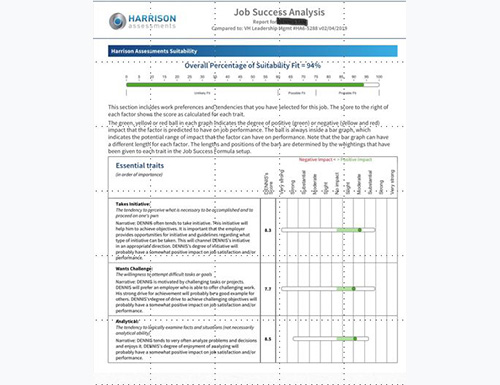
Another advantage is that the tool doesn’t require in-house expertise to interpret. Anyone can administer it, and a single template match costs less than RM 100—a small price to pay when you’re hiring staff at a minimum wage of RM 1,700/month.

For managerial roles, we often invest in the full report, which includes detailed trait analysis and paradox reporting—showing how a person behaves under stress. That report costs around RM 500 (volume pricing) and is well worth the cost.

While I won’t go into all the technical features here, I hope this gives you a sense of how we use data and science to guide our people decisions—not just instinct.

The purpose is just to provide a taste of what you can learn about a person and not to explain it in detail. This is a tool to be used as part of your interviewing process. We ask our management staff to redo the assessment every 3–4 years to fine-tune their development based on any weaknesses identified.

You can reach out to the company at https://lnkd.in/g-mkBNFs

Final Thoughts

Recruiting and developing the right people is not just about instincts or credentials—it’s about understanding potential, character, and alignment with your values. The right tools, like the Harrison Assessment, can help you take the guesswork out of hiring and focus your energy on growing people who will grow the business.

✅ If you’re serious about building a strong team, start looking beyond the CV. Use data, structure, and tools that support long-term development—not just short-term fit.

Why It’s so Hard To Make Money in Hotel F&B

Why It's Hard to Make Money in Hotel F&B post

Have you watched the last 3 videos of Mastering Hospitality?

As part of my collaboration with Hotelyug and Siddhesh Narvekar, I’m excited to share this next power-packed insight focused on driving meaningful change in hospitality — from people practices to profitability.

So far we have explored team dynamics, leadership truths, and the human side of our industry.

Now, it’s time to get into the numbers — and the financial realities that often go unspoken.

From the module Financial Management in Hospitality,
comes a revealing new episode:

Why it’s so hard to make money in Hotel F&B.

When I first entered the hotel business, I assumed guests would naturally eat at the hotel.
That assumption? Cost me.

Over 35 years, I’ve asked thousands of people one question:
“In all your hotel stays, how often did you actually eat there?”

The patterns are clear:

– 75–85% eat hotel breakfast (because it’s included)
– <5% eat lunch
– ~12% eat dinner
– Room service between midnight and 6:30 AM? Less than 0.1% use it.

So, why are we still building restaurants that don’t turn a profit?

In this video, I break down the economics of hotel F&B — and share a personal story from our own team that perfectly illustrates the commercial dilemma.

It’s short, sharp, and might just shift your thinking.

Full course available here:
https://lnkd.in/g9nNq2sP

Watch full video here –
https://hotelyug.com/courses/mastering-hospitality/module4/sub1/why-its-hard-to-make-money-in-hotel-f&b

Follow for more no-fluff hospitality insights:
Dennis Tan | Siddhesh Narvekar | Hotelyug | The Everly Group

Why Math Skills Matter in Hospitality Operations

Why Math Skills Matter in Hospitality Operations post

The 3rd Video in the Mastering Hospitality series is now live—right here on LinkedIn.

As part of my collaboration with Hotelyug and Siddhesh Narvekar, I’m excited to share this next power-packed insight focused on: People Development & Performance Optimization.

In this short but impactful video, I reflect on a leadership lesson forged through real experience—

Why We Test Algebra Before Hiring Leaders.

After multiple setbacks in developing leadership talent, one truth became clear: Without logical thinking, leadership doesn’t take root.

So we introduced a bold yet simple filter:

A pass in M5-level math or our in-house algebra test—for roles involving cash, decision-making, and responsibility.
Why? Because behind every effective leader is a structured, logical mind.
Clear thinking. Strong teams. Real results.

Explore the full Mastering Hospitality course –
https://lnkd.in/g9nNq2sP

Watch the full video –
https://hotelyug.com/courses/mastering-hospitality/module3/sub1/why-math-skills-matter-in-hospitality-operations

For more grounded and practical leadership insights, follow:
Dennis Tan I Siddhesh Narvekar | Hotelyug | The Everly Group

The Accidental Hotelier – The Economics of Customer Recovery

for all plain post

Let me take a moment to share what I’ve learned about the economics—and impact—of customer recovery.

When I first stepped into the hotel industry, I made an unconventional move on Day Two: I delegated recovery authority directly to frontline staff.

Probationary staff were empowered to recover up to RM 250, and confirmed staff up to RM 500. My reasoning? Speed and cost.

All of us have experienced the frustration of having a complaint ignored or handled poorly. Our approach was simple: recover in 10 seconds, always in favor of the guest. When problems are resolved instantly, even a dissatisfied guest is likely to leave with a smile.

We institutionalized this with a policy to apologize and recover until the guest smiles. That smile is our signal that recovery has succeeded. And sometimes, it comes with the help of a little stuffed bear with with the words: “I’m sorry, please bear with us”. Or a rubber duck, labeled: “I’m sorry, we won’t duck our responsibility.” These gestures have consistently brought smiles—sometimes even requests for extras for the kids!

From a cost perspective, the logic is compelling. If my time (or a GM’s) is worth more than RM 500 per hour, it’s inefficient to spend it on resolving minor guest issues. Empowering staff speeds up recovery and frees senior leaders for higher-value work. It also shows trust in our team—and they rise to the occasion.

We now train every team member to see guest recovery through the lens of Return on Investment (ROI). For example:

• The variable cost of a room is about RM 15 per night. If we sell at RM 180, we can afford to give away the room up to 12 times before losing that RM 180. In practice, a single waiver typically resolves the issue—and we still make RM 150.
• Food and beverage has a 30–35% variable cost, meaning we can give away the same item three times before it costs us the full retail value.

And remember: a recovered guest returns and recommends us to others.

That goodwill compounds. In contrast, a disgruntled guest can damage our reputation by telling 10 others. That’s a heavy multiplier—on the wrong side of the balance sheet.

Our department heads and GMs can approve waivers up to RM 2,000, with decisions made within 10 minutes—enough time to verify facts without delay.

We do review every case to ensure there’s no misuse. If we find abuse or repeat bad-faith behavior, we “export” the customer to our competitors. This is rare, but it does happen—maybe once every 2–3 years.

Customer recovery, done well, isn’t just service—it’s smart business.

✅ Have you experienced a truly memorable service recovery? Or have you empowered your own team in a similar way? Let’s swap notes in the comments.

Service Charge Sharing: Driving Employee Morale

Service Charge Sharing Driving Employee Morale post

Did you catch the last video?

Here’s another power-packed insight on Human Management and Leadership from my journey in hospitality, which I’m excited to share with you as part of my collaboration with Hotelyug and Siddhesh Narvekar.

One of the biggest challenges I faced early on was the service charge system—meant to reward staff but often shrouded in mistrust and confusion.

When I asked a simple yet revealing question—
“How much did the staff actually receive this month?”
—the answer was silence. Management had no clarity. That’s when I realized trust was missing, and morale was suffering.

That moment sparked a bold shift in how we handle service charges—based on deep human management and leadership insights:

-No more blind deductions.
-Transparent sharing.
-Rewards for loyalty and unity.

The results? A motivated team, less loss, and a culture where everyone feels valued.

If you lead people in hospitality, this quick video is your 2-minute wake-up call to rethink what leadership really means.

Follow for more no-fluff leadership gold:
Dennis Tan | The Everly Group | Siddhesh Narvekar | Hotelyug

Watch full course here –
https://lnkd.in/g9nNq2sP

Watch full video here –
https://hotelyug.com/courses/mastering-hospitality/module2/sub1/service-charge-sharing-driving-employee-morale